
Paddy is an important cereal crop in our country. Paddy is cultivated in an area of 13 to 13 lakh hectares in our state. 65 percent of the world’s total population uses it for food. Paddy husk is used for oil extraction and fodder for cattle. While straw is used for cattle feeding, making ropes and mats. To get more paddy production, it is essential to adopt improved varieties recommended by the Agriculture Department and follow all the appropriate scientific farming methods.
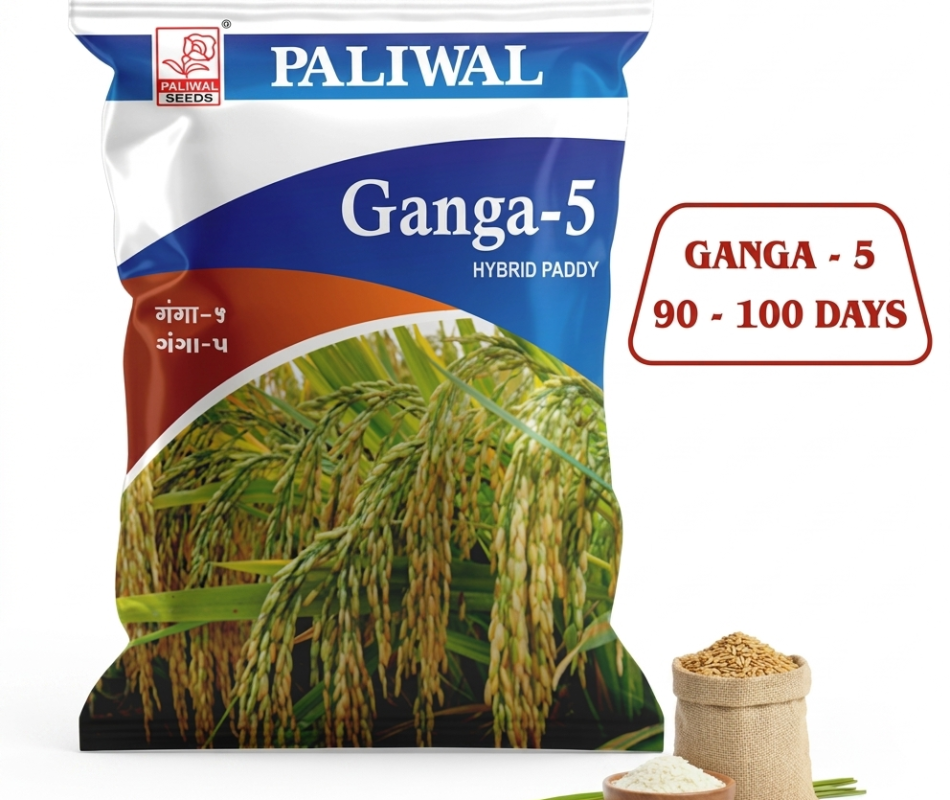
Farmers, nursery owners, and landscapers, place your bulk order today for the best quality and reliable delivery.
Direct sowing method: This is the commonly used method for both central and southern Gujarat. For small seeded varieties, 10 kg per hectare and for large seeded varieties 20 kg per hectare. The germinated seeds are removed and leveled by an experienced person on the grounds they are sown in lines at a distance of 22.5 cm which saves the labor cost of raising the plant in the nursery.
Fertilizer: In transplanted paddy crop, the following chemical fertilizers are recommended according to the ripening time of the varieties. For early maturing varieties, N:P:K, for varieties, 120 kg., 60 kg. of phosphorus and 60 kg. Nitrogen element is recommended per hectare. Out of which 60% nitrogen should be given in the base, 60% nitrogen at the time of planting and the remaining 25% nitrogen should be given at the time of sowing. For nitrogen-containing fertilizers, either urea or ammonium sulphate should be used in kg./ha. as shown below:
| Sr. No. | Ripening Variety | Type of Fertilizer | At the Base | Foot Time | When the Soul Falls | Total Fertilizer |
|---|---|---|---|---|---|---|
| 1 | For Early Maturing Varieties (90-100 Days) | Ammonium Sulphate | 152 | 152 | 76 | 380 |
| Urea | 70 | 70 | 35 | 175 | ||
| 2 | For Medium Late Maturing Varieties (115-120 Days) | Ammonium Sulphate | 190 | 190 | 95 | 475 |
| Urea | 87 | 87 | 43 | 217 | ||
| 3 | For Late Ripening Varieties (130-140 Days) | Ammonium Sulphate | 229 | 229 | 114 | 571 |
| Urea | 104 | 104 | 52 | 260 |
The third and last installment of nitrogen-containing fertilizer, which is given at the time of sowing, should be given carefully. Care should be taken that the dose should not be more than recommended because giving too much nitrogen causes vegetative growth of the plant and decreases grain development. The nitrogen levels vary quickly if the availability of water is favorable for the plant and it becomes difficult to control. Giving 2% lime or urea fertilizer (urea 20% nitrogen). If there is any doubt while giving complete fertilizer, drain the water from the pot and give the fertilizer and water it after two days or mix urea with moist soil and keep it in the shade for few days and then give it thoroughly or take 2% of urea and mix in water and mix with a fine powder and give it after 2 days.
For the use of organic fertilizer, within three to four days of planting, mix 10 kg of biofertilizer with nitrogen-fixing and Phosphorus and Reproduction (PSB) at the rate of 11 liters/hectare each and spread evenly.
Based on soil test reports, it is recommended to give 60 kg of phosphorus to the paddy crops in South Gujarat, i.e. 90 kg. DAP per 100 kg per hectare the relevant amount of phosphorus-containing fertilizers. + the first installment of nitrogen-containing fertilizers and if there is a zinc deficiency in the soil, 25 kg of zinc sulphate should be given at the base at the time of planting to the soil of 1 hectare. Micro elements like manganese, iron, copper, zinc, molybdenum, silicon, boron and others are required in very small quantities. Moreover, now the benefit of silicon element has been found in paddy, for this it is also necessary to give organic fertilizers in the field.
Weed Control:
In the garden: On the second day of sowing, apply Butachlore or Basimizole at 1.25 to 1.50 grams of active ingredient in 10 to 45 liters of water in 10 acres of land and apply. It is also advisable to apply Pendimithalin 30 EC at 1.0 kg active ingredient /ha.
In the field: Mechanical weed control is very useful in the planted paddy as it is economically affordable. In mechanical method, weed control with Japanese paddy weeder destroys weeds, increases air circulation in the soil and increases the number of plants due to root pruning.
Herbicides for use after planting: No pre-emergent/pre-emergent weeding. For this, any of the following herbicides should be applied four days after planting, raised with water, when there is standing water in the field and then wiped off.
Harvesting and storage: Depending on the days of paddy ripening, harvesting will given stalks when the grains turn yellow and mature gives more rice yield. Paddy grains are less damaged. Paddy dries 3 to 4 percent after storage. After threshing, the paddy should be dried and stored so that 8 to 10 percent moisture remains.
For weed management in standing paddy crop, spray Bispiribac Sodium 10% S.C. No.60 gm S.L/ha According at 20 to 25 days interval.
Special Note:
Production may increase or decrease depending on the weather, rainfall and water availability of the area. Also, it is advisable to contact an agricultural expert or agricultural university near you as per your convenience.
With decades of innovation and a commitment to quality, we empower Indian farmers with advanced, high-yield seeds and cutting-edge biotechnology solutions.
Property No 1880, God. No 27, shyam Estet Aslali ta. Daskoi, dist Ahmedabad – 382427 Regd. Office: 25, Commercial Complex, NSTM., Surat
+91 94268 59471
paliwalseeds@yahoo.com.
Copyright © 2026 all rights reserved. Powered By Daddy Digital